Extract 概括
In 2022 summer, I worked as a summer English teacher in a local Italian summer camp in Sicily for a month. Living with locals and being the only foreigner in the campsite was an incredibly eye-opening and fascinating life experience to me. 5 weeks without a single bit of non-Italianness; language wise, diet wise, people wise, culture wise and punctuality wise. I was the only non-Italian substance within the campsite barrier. The summer camp somehow presented "Italy" to me in the purest form of rendition. The followings are some observations and conclusions I came up with from my stay.
在2022年,我在意大利西西里島的一個本地夏令營當了一個月暑期英文老師。和本地人一起生活,並且作為營地裡唯一的外國人是一段令我耳目一新的經歷。因為參加了這夏令營,我親身體驗/了解了意大利最真實的一面。五個星期沒有一刻是「不意大利」的;語言、飲食、人、文化和遲到的習慣。我是營地內唯一「非意大利」的東西。我將會分享一下在營地裏的所見所聞。
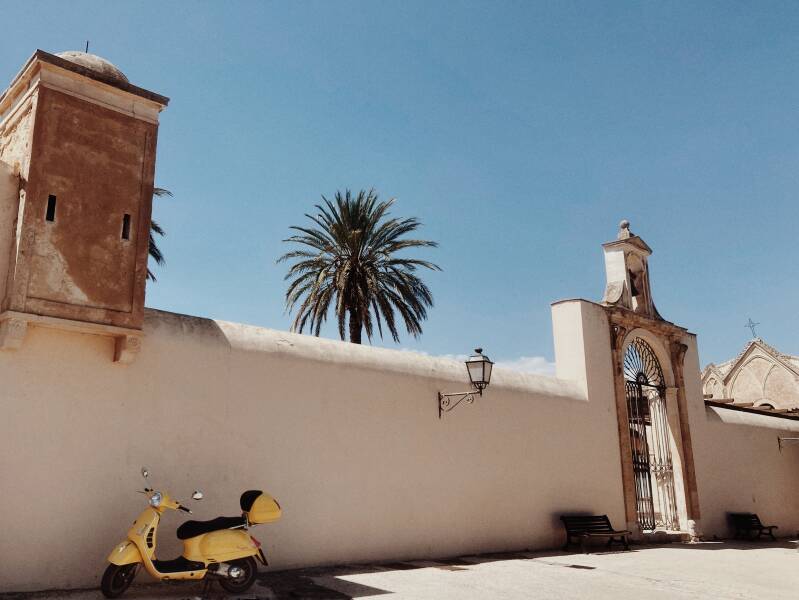
Walking through this gate to go to work/teach every day
每天都要進出這個鐵閘去課室和房間
1. Stereotypes both on Italy, and Italians’ on the outside world | 意大利的黑板印象和意大利人對世界的刻板印象
I grew up having Pizzahut's pizzas with pineapple topping, I still like it today. I first started to gain more Western friends when I lived in Australia, I came across the debate of whether putting pineapples on pizzas is appropriate. I thought it was just a casual discussion topic amongst friends (in the West's social context), but little did I know the Italian kids I met in the summer camp took this question very seriously. "Do you have pizzas with pineapples?" Yes, my favourite pizza is Pizza Tropicale. With crossed arms and a stern expression, the kids showed their disapproval of my unsophistication. "Do you cook spaghetti with ketchup?" No, of course. I didn't want to disappoint them twice., I actually do... The kids applauded for me. I'm not exaggerating, I got interrogated about my preference in these dilemmas on a daily basis.
"Do you have a girlfriend?" was the second most popular question I was asked. I'd normally counter-ask them "How about you?". Most of them said they were looking for one; not a basic ragazza/o but ragazza/o svedese. I learned that the Italian word for "girl" (ragazza) and "boy" (ragazzo) also means "girlfriend" and "boyfriend". Quite a number of them emphasised their urge to date a Swedish person. I had no idea why their dream partner had to be Swedish but they all got very excited when the new half-Swedish/half-Italian boy joined halfway in the camp.
9 out of 10 Italian kids and young adults (my colleagues in the camp) said they wanted to do Erasmus so bad. The Erasmus program allows students to study or intern abroad, it promotes cultural exchange, language learning, and international collaboration, fostering global understanding and connections. So many kids and other colleagues who are in uni said their itch was to be able to do Erasmus, doesn't matter if it's a week-long exchange or a 3-year-long degree.
我自小喜歡吃Pizzahut的夏威夷披,至今還是很喜歡。當我在澳洲開始結交更多西方朋友時,才發現原來應不應該放菠蘿在pizza上是個在西方被熱烈討論的話題。我原本以為這只是我朋友之間的無聊的話題而已,沒想到在夏令營遇到的意大利青年對這個問題非常認真:「你吃菠蘿pizza嗎?」是的,我最喜歡的pizza就是夏威夷披(有菠蘿)。孩子們雙手交叉,表情嚴肅地表示不滿,「那你用茄汁煮義大利粉嗎?」不會,當然不會。我可不想再讓他們失望了。(其實我真的會呢……)青年們做為我鼓掌。我沒有誇大,幾乎每天都被他們問這些有關意大利美食偏好的問題。
「你有女朋友嗎?」是我被問到的第二個最熱門的問題。我通常會反問他們「那你呢?」大多數青年說他們正在找,但他們很有要求;最好的是瑞典人的女朋友/男朋友。意大利文中的「女孩」(ragazza)和「男孩」(ragazzo)也可以意味著「女朋友」和「男朋友」。不少青年人強調他們特別想和瑞典的ragazzo/a拍拖。至於為什麼他們心儀對象一定要是瑞典人,我真的毫無頭緒。好笑的是有一天,真的有一個半瑞典半意大利的混血男孩加入夏令營,女孩都興奮不已。
十個意大利孩子和年輕人中有九個(包括和我同齡的夏令營同事)說他們非常想參加Erasmus。Erasmus是個讓歐盟成員國的學生到國外學習或實習的交流計劃。成功報讀Erasmus的人會到處有文化交流、語言學習和國際合作之類的非一般學習/實習體驗。很多青年和正在就讀大學的同事們說,他們的夢想就是可以考上Erasmus,即時去一兩個星期也沒關係。
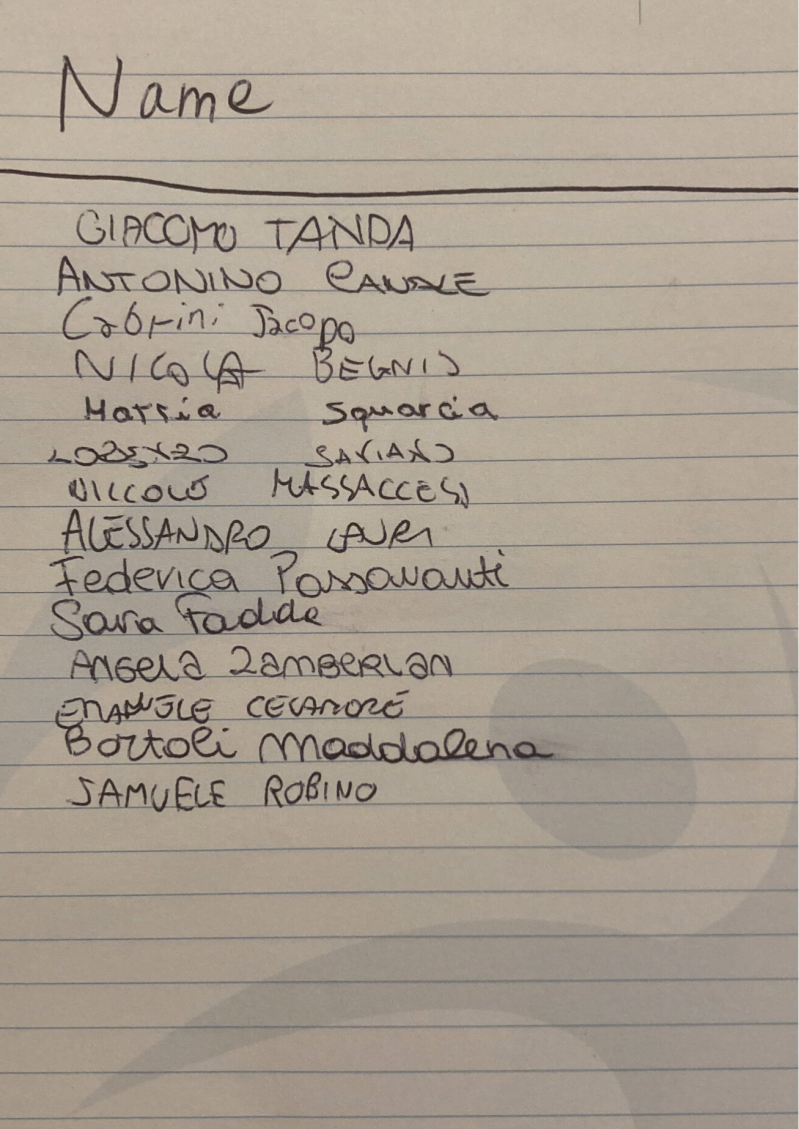
My first time ever having to remember Italian names. It was quite challenging, to be honest
第一次接觸意大利文名字,開頭很難記入腦
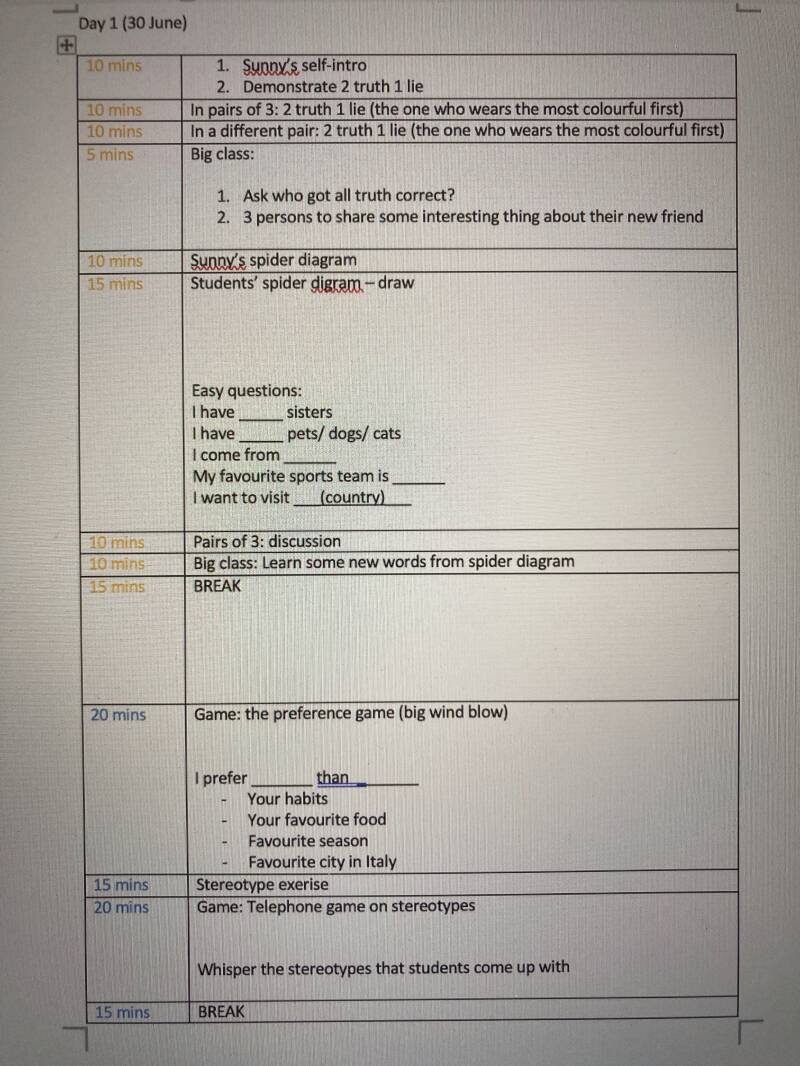
One of my many lesson plans
準備課案
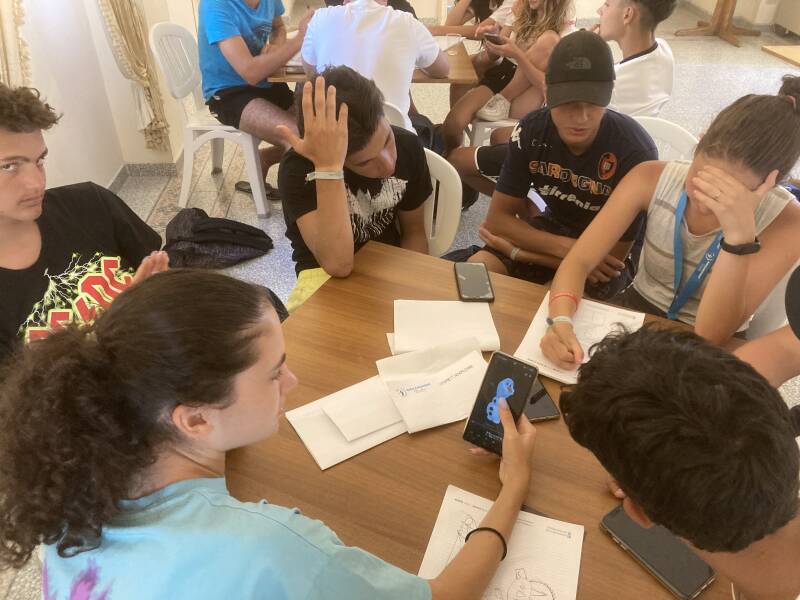
Playing Pictionary in class
上課玩「猜猜畫畫」
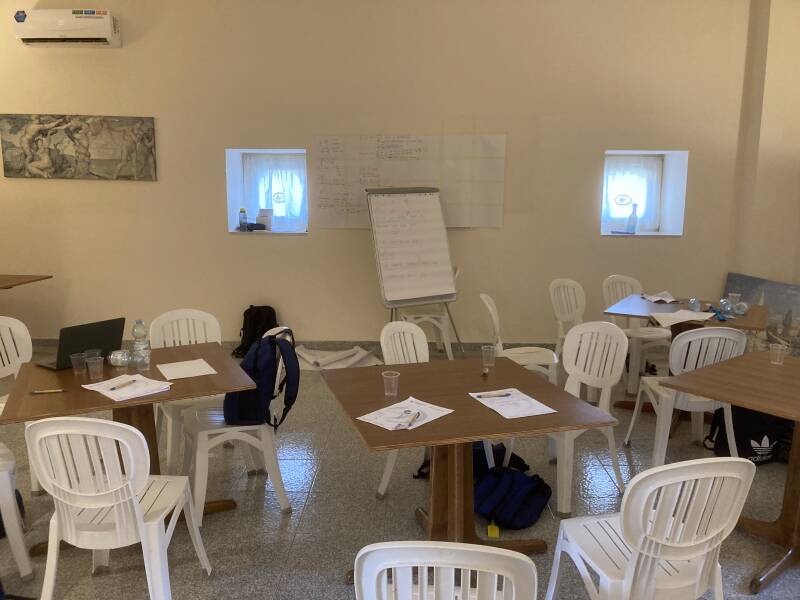
Our "classroom"
我們簡陋的「班房」
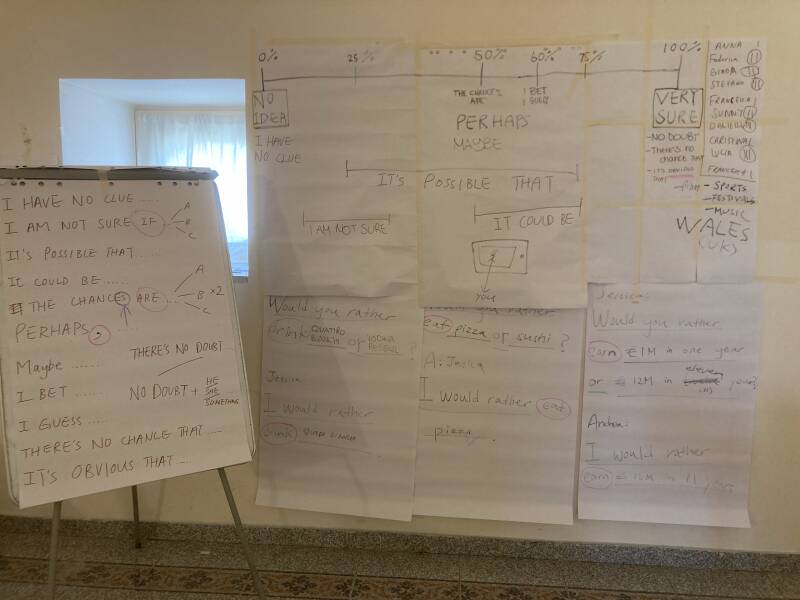
No proper whiteboards were provided by the school, I had to join together and stick separate A3 sheets on the wall then write on them
因為公司沒有給我們白板,我要先把A3紙貼在墻上,然後再當它們是白板開始在上面寫字
2. School system | 教育系統
From what I heard from my students, the Italian education system looks like this;
3-11 years old: primary school
12-14 years old: secondary school
15-19 years old: high school (liceo/instituto) of the following options:
- Liceo classico (humanity subjects)
- Liceo Linguistico (languages)
- Liceo musicale e coreutico (music)
- Liceo scientifico (science)
- Liceo artistico (arts)
- Instituto tecnico (technical/vocational)
- Instituto professionale (professional/vocational)
Whenever students are losing their concentration or starting to fall asleep, I ask “So, who’s your most hated teacher and subject at school?” “I hate Latin and the Latin teacher the most!” They replied. Latin is a compulsory subject for those who study at a Liceo Linguistico. "Latin is difficult to learn, boring, and useless! I’d rather learn English” my miserable students ranted. Well, Italian is considered the contemporary language that has the highest similarity to Latin, yet these Italian-speaking Liceo students (presumably language lovers) still find it challenging to learn…
One more interesting thing about Italian schools was —— the “school uniform” was a dream for every kid. Italian high schools (liceo) don’t have school uniforms and most of my kids were jealous of the school uniform I had, which was rather not preferred by almost every kid in Hong Kong.
In Hong Kong, we’d die to pay HKD$20 (to be transferred to a random charity by the school) to wear our own clothes on the last day of school before Christmas.
根據我這夏令營的學生們聽來的,意大利的教育系統大概是這樣的:
3-11歲:小學
12-14歲:初中
15-19歲:高中(Liceo/Instituto),高中有以下幾種選擇:
- Liceo classico(人文科目)
- Liceo Linguistico(語言)
- Liceo musicale e coreutico(音樂和舞蹈)
- Liceo scientifico(科學)
- Liceo artistico(藝術)
- Instituto tecnico(技術/職業)
- Instituto professionale(專業/職業)
每當我發現學生開始失去注意力或昏昏欲睡時,我就會問他們:「你們在學校最討厭的老師和科目是什麼?」他們回答:「我最討厭拉丁文和拉丁文老師!」拉丁語是那些在Liceo Linguistico學習的學生的必修課目。「拉丁語難學、無聊又沒用!我寧願上英語課。」那些可憐的學生向我抱怨。意大利語被認為是與拉丁語最相似的現代語言,但這些說意大利語的Liceo學生(意味他們也愛學語言)仍然覺得學拉丁語很有挑戰性……
關於義大利學校的另一件有趣的事情是——「校服」是每高中生的夢想。意大利高中(Liceo)沒有校服,我的大多數學生都羨慕我中學時有的校服。好笑的是,幾乎所有香港的學生都不太喜歡校服。在香港,我們都恨不得花HKD$20(捐給學校,學校在轉給慈善機構)在聖誕party當天穿便服上學。


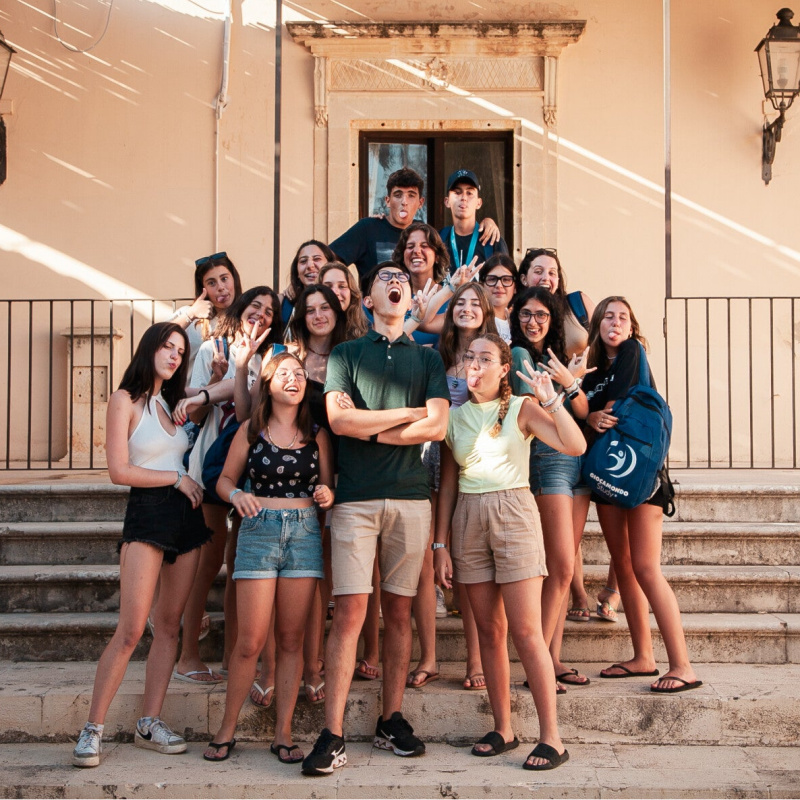
My students (who would wear bikinis to class)
我的學生(會穿比堅尼上我課)
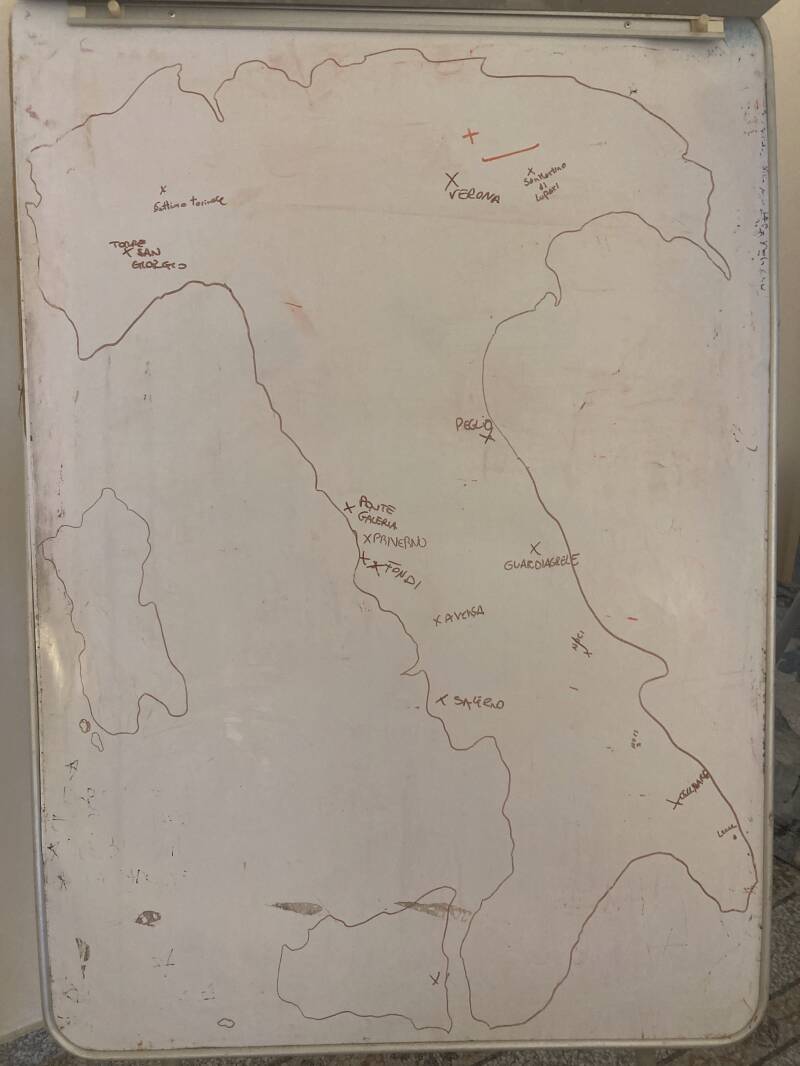
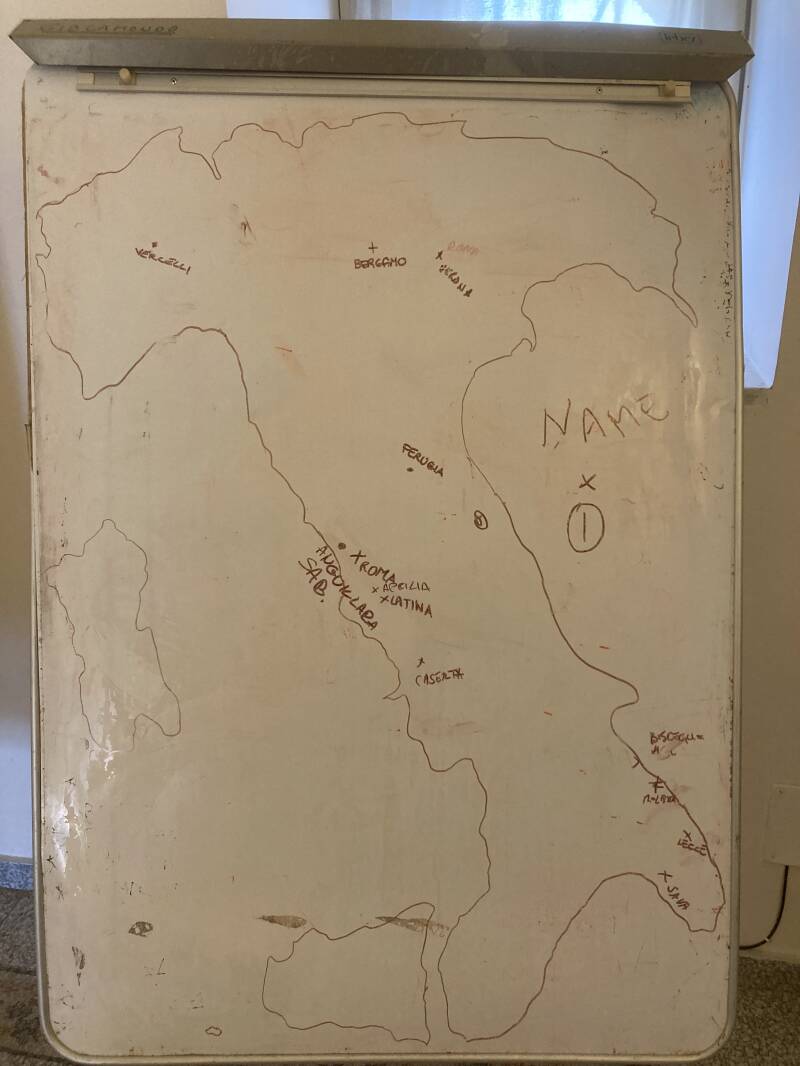
Cities and towns where the kids come from
學生來自意大利不同的地方
3. Linguistics | 語言學
I can talk about this all day long. I've always had a keen interest in observing and learning the science and mechanism of languages. I've never officially studied linguistics at uni or anything (which was something I regretted not doing), the below analysis is based on my personal conclusions of my observation and is rather biased.
For me, the Italian-English accent is definitely one of the cutest and most subtle things I found on earth. Unlike English and other Germanic languages, Italian as a Romance language, tends to require speakers to pronounce every syllable of a word. So, if an Italian speaker were to say "nature" in English, they tend to say "na-tu-re" instead of "na-chur".
Second, Italian vocabularies tend to have a pronounced consonant as the final letter of most words. For instance, "musica" (music) and "accento" (accent). Therefore, even when an Italian speaker knows "music" in English doesn't have the letter "a" at the end and tries to skip the "a" sound, they are still likely to keep a hinge of consonantal sound after the "c" - "mu-sic-keh". More examples: "om-work-keh" (homework), "won-neh" (one), "an-deh" (and). No matter how many times I reminded them not to make a consonantal sound at the end of words when speaking in English, they just couldn't control their tongue/mouth but allowed the cheeky little "eh" sound to sneak in...
I didn't mean to, but I also picked up a few slangs and swearwords from the kids;
- che cazzo (wtf)
- che schifo (how disgusting)
- merda (sh*t)
- dimme (tell me/ you can start speaking)
這是我可以說不完的話題。我一直對觀察和學習語言很有興趣。雖然我從未在大學正式讀過語言學(這是我的遺憾),以下的分析都是基於我個人的觀察得出的結論,因此可能有些偏頗和unprofessional。
對我來說,意大利人的英語口音絕對是地球上最可愛和微妙的事情之一。與英語和其他日耳曼(Germanic)語言不同,作為羅曼語(Romance)族的意大利語往往要求說話者發出每個音節(syllable)。所以,如果一個意大利人說出英語的 “nature”,他們很大機會會發音成 “na-tu-re” 而不是 “na-chur”。
其次,大多數意大利詞彙的末尾都有一個明顯的響音(vowel)。例如,“musica”(音樂)和“accento”(口音)。因此,雖然英文字 “music” 最尾沒有字母 “a”,很多意大利人仍然可能在 “c” 後保持一個響音的聲音 - “mu-sic-keh”。更多例子:“om-work-keh”(homework 作業)、“won-neh”(one 一)、“an-deh”(and 和)。無論我提醒他們多少次在說英語時不要在詞尾任意加上vowel的音,他們就是控制不住...
我不是個喜歡說髒話的人,但我也從孩子們那裡學到了一些髒話和slang:
- che cazzo(wtf)
- merda(sh*t)
- che schifo(真噁心)
- dimme(告訴我/你可以開始說話了)

My lovely colleagues, whom I learn those swearwords from
友好但又教我講髒話的同事
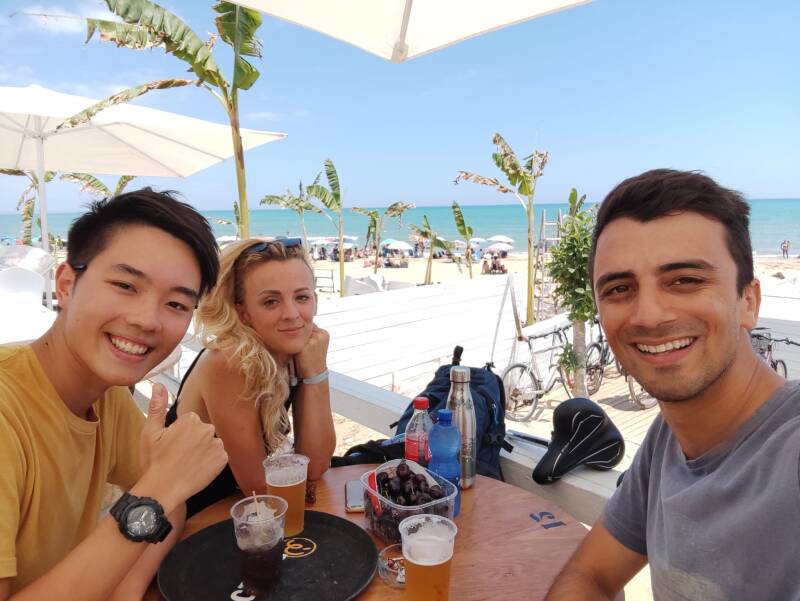
My friends C (left) and D (right). One day, we found out we could hire bikes and cycle out of the remote campsite. We cycled for almost 2 hours non-stop to get to the nearest town Scoglitti, for some fruits (no fruits in the campsite), the beach, and drinks
我朋友C(左)和D(右)。有天我們發現我們原來可以租單車終於可以離開一下營地。我們踏了兩小時單車到最近的小鎮Scoglitti,買了一些生果、享受一下陽光與海灘、喝啤酒
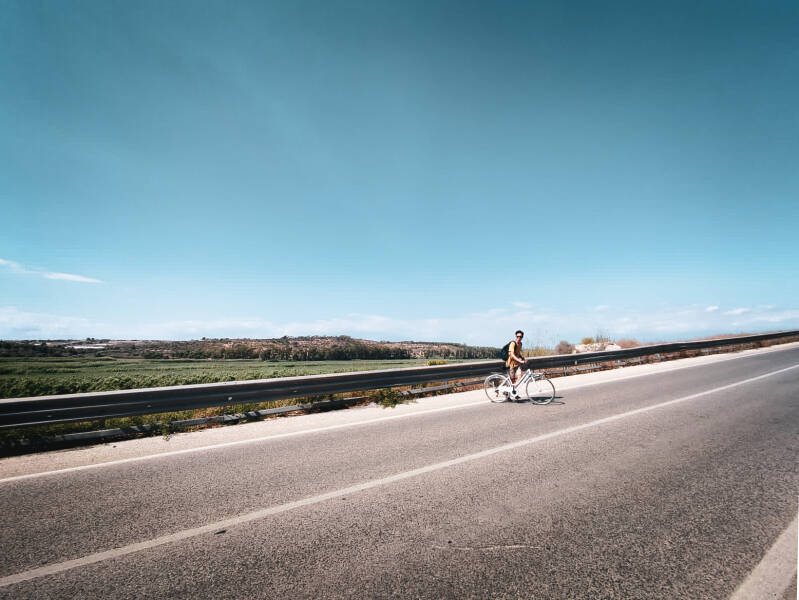
In the middle of nowhere in Sicily | On our way to hunt for fruits in the nearest town
西西里島的荒蕪之地 | 那個兩小時的單車旅程的途中
4. Ancestry |(找不到一個合適的中文字)
Like most other European peoples, Italians have a very diverse ancestry. Physical features include blonde, ginger, brunette, eyes of different colours, dark facial hair, and light facial hair, some had more Arab-looking appearance (which surprised the unsophisticated me the most), and some claimed to be fully Italian but had Greek, Albanian, French, and Berber last names.
和大多數歐洲人一樣,義大利人的ancestry也很mixed。外貌特徵包括:金髮、紅髮、棕髮、各種顏色的眼睛、深色鬍子和淺色鬍子。有些西西里人看起來更像阿拉伯人(我有點surprised),有些人自稱是純正義大利人,但卻有希臘、阿爾巴尼亞、法國和柏柏爾文(Berber)的姓氏。
5. Dances 跳舞
Throughout my stay in the summer camp I was heavily brainwashed by the never-stopping dance music. Now, those music aren’t lame songs that Smooth Radio (UK) would play but songs that every Italian would recognise, know, and know the dance moves of. The second after the DJ starts to play those songs, residents of the camp (of all ages) start dancing instantly.
在夏令營我被永遠不會停止播放的營舞音樂洗腦了。這些音樂可不是英國Smooth Radio播的又老土又悶的歌,而是每個意大利人都認識,而且會知道怎樣跳的歌經典夏令營營舞歌。DJ一放開始些歌,營裏的住客和職員、男女老幼,來自意大利東南西北,都會自動跳舞。
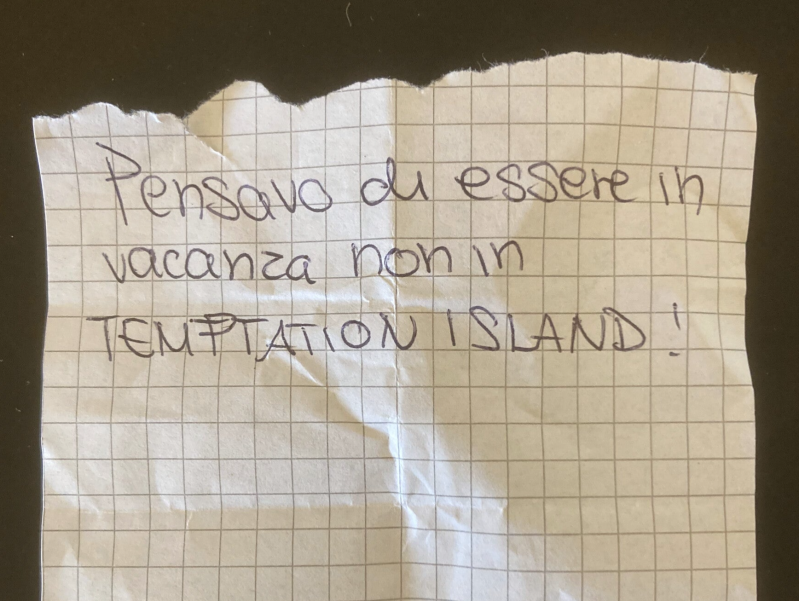
"I thought I had a holiday in Temptation Island!"
「我這個暑假彷彿去了Temptation Island!」

Bro taught a lesson on English swear words, respect
我朋友教了一課粗口課, respect

My friend survived on this "whiteboard" for 5 weeks
我朋友用了這個「白板」五個星期
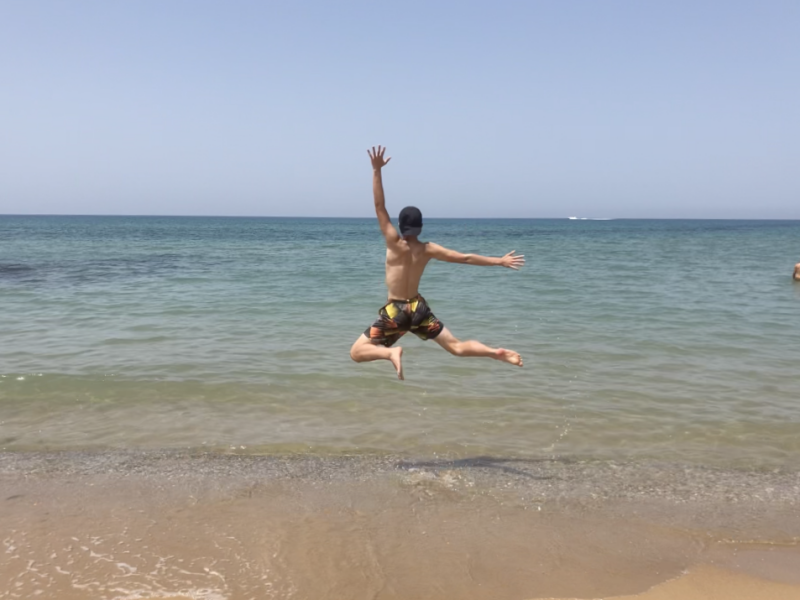
The one and only entertainment after work - to go to the beach (that's the Mediterranean sea)
唯一的工餘娛樂-去開灘游水(這是地中海)
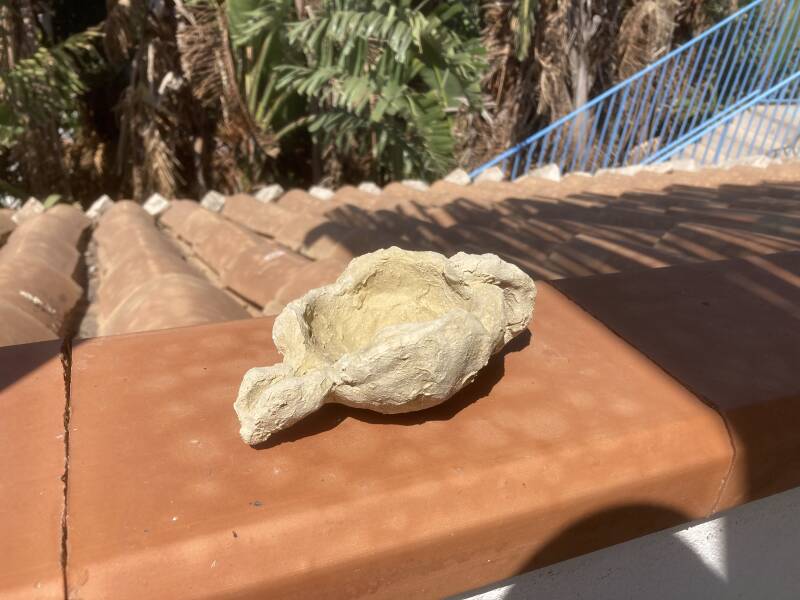
I made a teapot made of clay found at the seabed of the beach we always swam at
我用在那個海灘的水底找到的天然陶泥做了個茶壺

Shakerato coffee almost everyday by the beach
差不多每日去海灘時都會喝的Shakerato咖啡
6. Italian kids are wild | 意大利青年的狂野
My students were predominantly 13-15 years old with 2-3 of them being 17. Lots of them did smoke. I’ve never seen kids at this age smoking. During our 30-min breaks (namely smokos) between lessons, the kids rushed out to the courtyard looking for mates who had a lighter. After breakfast, lunch, or dinner, they’d also gather to smoke on the balcony. Some of my favourite students invited me to smoke with them together, which I rejected, but they insisted and offered “Teacher if you don’t know we can teach you how to roll a cigarette”. These kids knew where to get tobacco in town.
Many of my colleagues (at my age) would smoke too, I didn’t really want to judge (because smoking seemed the stereotypical equivalent of “being sketchy” in Hong Kong) but it’s an experience for me to see this side of Italy or the world.
A gossip had been going on between some staff members of the campsite and somehow was passed to me; an underage student of my friend/colleague slept with a barista. The girl kept it to herself until she burst into tears in front of my other friend/colleague during one of the “smokos”, I guess she regretted doing it and was worried she’d be pregnant soon..? By the way, I've also seen many kids meeting and changing girlfriends multiple times within the 3-5 weeks. They'd make out literally every second and everywhere (even during class time). Yes, I didn’t exaggerate or anything, these were dramas that actually happened in the summer camp.
My knowledge about “drugs” is very shallow and limited. I heard 2 kids were expelled because they brought “magic🍄” to the summer camp. “What is a magic 🍄?” I asked my friends when we were having dinner in the canteen, and they told me to keep my volume low…
On graduation day, we pulled a massive party where everyone would dress up and stay up til the next morning. I’m pretty sure underage drinking (publicly) it’s illegal in Italy but given they smoke, don’t mind having intimate evenings and sneaking mushrooms into the campsite, I wasn’t expecting to see too many sober souls that night. “Bang!” a boy collapsed in front of me. He was one of my favourite students very participative and a “role model” material in my class. Obviously, he was drunk, then collapsed, me and my friends and the other boys carted him back to his room.
These kids were 14 only.
我的學生主要是13到15歲,其中2-3個是17歲。他們很多都抽煙,我從沒見過這個年紀的人抽煙。在課堂之間的30分鐘休息時間(其實根本就是「放煙break」),學生會衝到院子裏找有帶打火機的朋友點煙。在早餐、午餐或晚餐後,他們也會聚在陽台上集體抽煙。我最喜歡那群學生還邀請我和他們一起抽,我拒絕了,但他們堅持說「老師,如果你不會,我們可以教你怎麼捲煙。」這些青年人亦知道可以在哪裡能非法買到煙草。
其實許多和我同齡的同事也會抽煙,我盡量提醒自己,不要judge(因為自小在香港,抽煙就好像等於「懷人」),反而告訴自己要放開心胸去看,去認識地球另一端的文化和現實。反正,抽煙確實並非只有壞處。每個人會有作事作決定的原因。
我聽聞夏令營的員工之間正在討論一個是非,最終傳到了我這裏:我朋友/同事的一個未成年學生和飯堂的咖啡師一起睡。那個女孩一直保密此事,直到在一次「煙break」崩潰地哭著告訴了我朋友。我猜她後悔了,應該擔心自己會懷孕...?此外,我亦看見過無數的學生在短短3-5星期中交過、換過至少三次女友。他們會無時無刻的kiss kiss(上課時也會)。是的,我沒誇張,這些都是在營地發生過的。
我對「毒品」的認知非常淺薄有限。有天,我聽說有兩個學生被開除了,因為他們帶了「magic 🍄」入營。「什麼是magic 🍄?」我們在食堂吃晚餐時問朋友,他們叫我小聲點……
在畢業那天,我們舉辦了一個大party,大家都打扮的很亮麗,並且應該都會party到第二天早上。我挺確定在意大利未成年青年(公開)飲酒是違法的。但既然我已經知道他們抽煙,亦不介和異性一同入睡,還偷偷把🍄帶進營地,我預計當晚會有人會喝醉。「砰!」一個男孩在我面前倒下了。他是我最喜歡的學生之一,平時非常積極參與課堂,還是我班上的「乖乖仔」。他喝醉了,然後倒下了,我和朋友們以及其他男孩把他抬回了房間。
他們才14歲而已...

Crossdressing (typical Italian summer camp event) at graduation party
典型意大利夏令營活動-男扮女/女扮男show
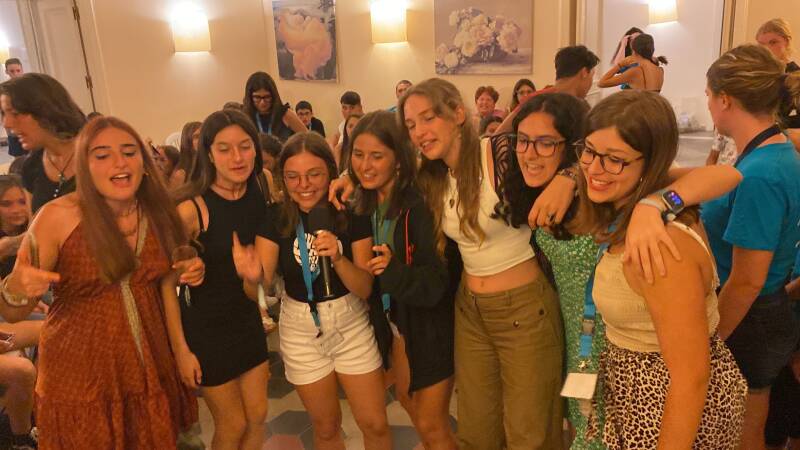
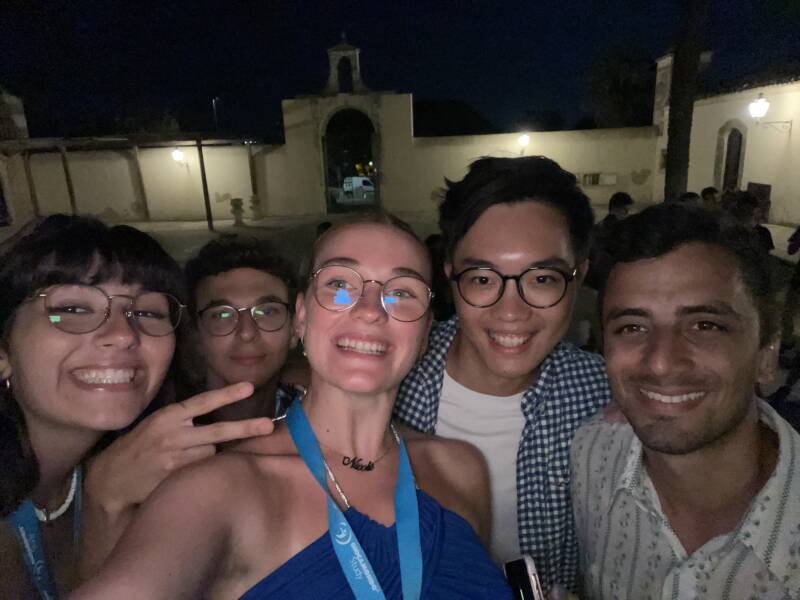
Graduation party
畢業party

I've had/seen/tried too many new things in life in Sicily that my friend convinced me to start making a list of my "first-times"
我在西西里實在有/見/試了太多新事物,我朋友建議我開始把我眾多的「第一次」記錄下來
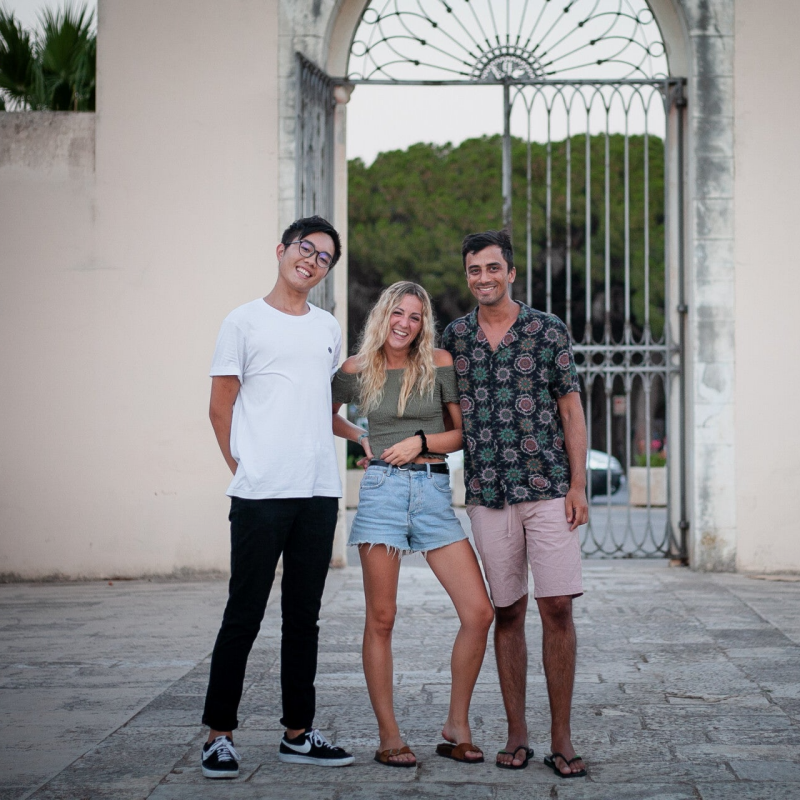
Without C and D, I wouldn't be able to survive in the summer camp. They were my in-camp personal translators, supportive colleagues, beach mates, night-out partners and amazing friends
如果沒有C和D,我不能夠在這瘋狂的夏令營生存。他們是我在營中的私人傳譯員、好同事、海灘夥伴、唯一的玩伴、好朋友
Conclusion & reflections | 總結及感想
Italy is an amazing country. Apart from having a relatively higher pickpocketer population in town, Italy’s presentation tends to be very positive and the nation is a cultural power as a whole. Its history, cuisine, landscapes, nature, and arts are lavishly impressive. I’m so thankful that I had the chance to see the other side of the coin that Italy also has its flaws and imperfectness. Italy isn’t as magical as how it’s presented as a tourist destination and as developed as how it was depicted by the media as an EU member country. I think it’s good that I’ve had these post-trip insights that I’d truly learned, experienced, and lived in Italy to such a realistic extent. My stay in Italy only lasted 5 weeks, hence, I’d say the conclusions I gave in this blog post are still very biased and rather shallow. I’d be pleased if you enjoyed reading it but please, only agree to anything I mentioned if you’ve been/lived there and experienced first firsthand.
After my five-week stay in the summer camp, I solo traveled around Sicily, Tunisia then northern Italy. See my other blog for my travel stories of those places.
除了扒手相對多一點外,意大利是一個很棒很值得到訪的國家。它亦是個非常強大的cultural power(文化軟實力強國)。它的歷史、美食、風景、自然和藝術都很rich和吸引。我很感恩有機會可以看到意大利的另一面,發現它也有缺點和不完美之處。我發現意大利其實並不像旅行雜誌中描述的那麼神奇,也不像媒體描述那樣美好的國度、歐盟成員國。我覺得這次意大利旅行/工作後的體驗很有可貴,因為我真真正正地學習了、體驗了真的「意大利」。說實話我只是居意五星期,所以我在這篇blog中寫的是很偏頗和biased的。如果你喜歡讀這篇文章,我會很高興!但請你親身去過或在意大利生活過,並且有同樣的體驗後,才同意我寫的任何內容。
五星期之後我離開了營地,一個人在西西里島、突尼西亞和意大利北邊遊歷多三星期。我在其他的blog post有那三星期的故事。

"Sunny you're beautiful" / "I have a crush on teacher Sunny"
「Sunny你很帥」/「我暗戀上你了,Sunny老師」
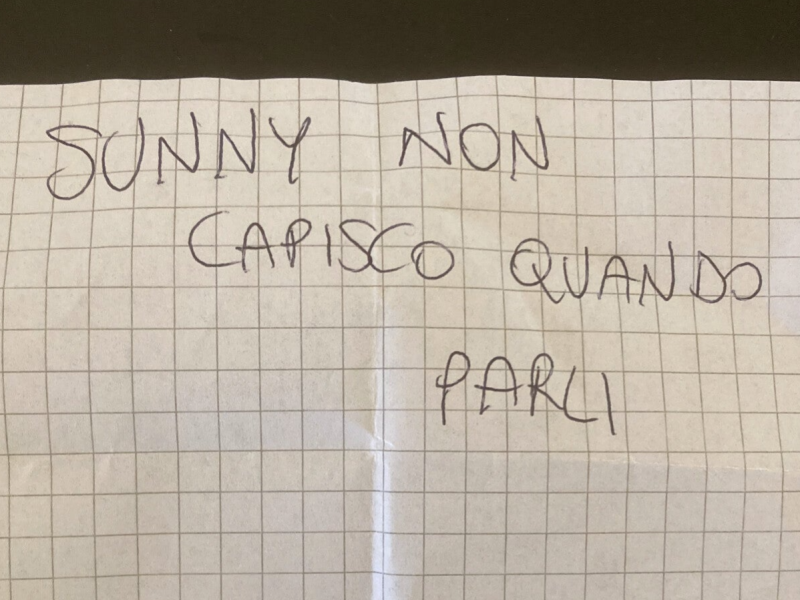
"Sunny I don't understand when you speak"
「Sunny我聽不明白你說什麼」
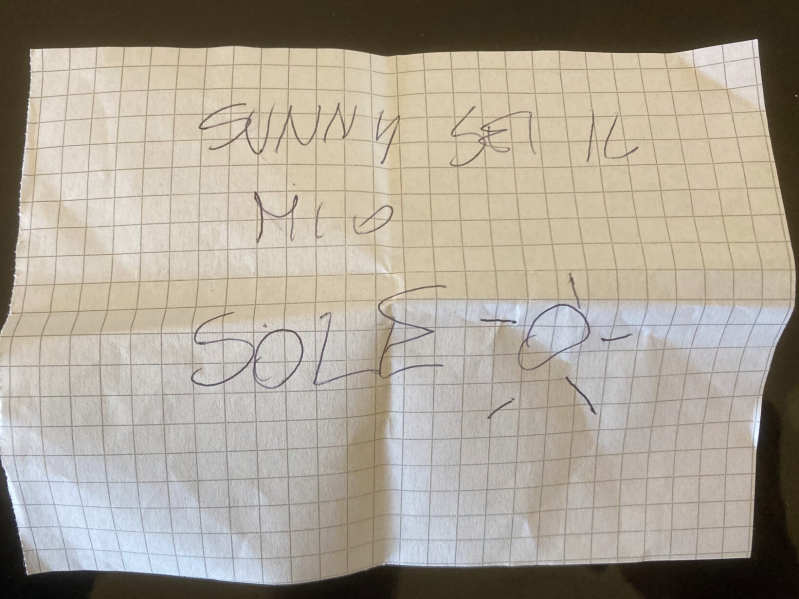
"Sunny you're my sun"
「Sunny你是我的陽光」
Create Your Own Website With Webador